Connecting Remote Care Teams Through Telemedicine: A Step-by-Step Planning Guide
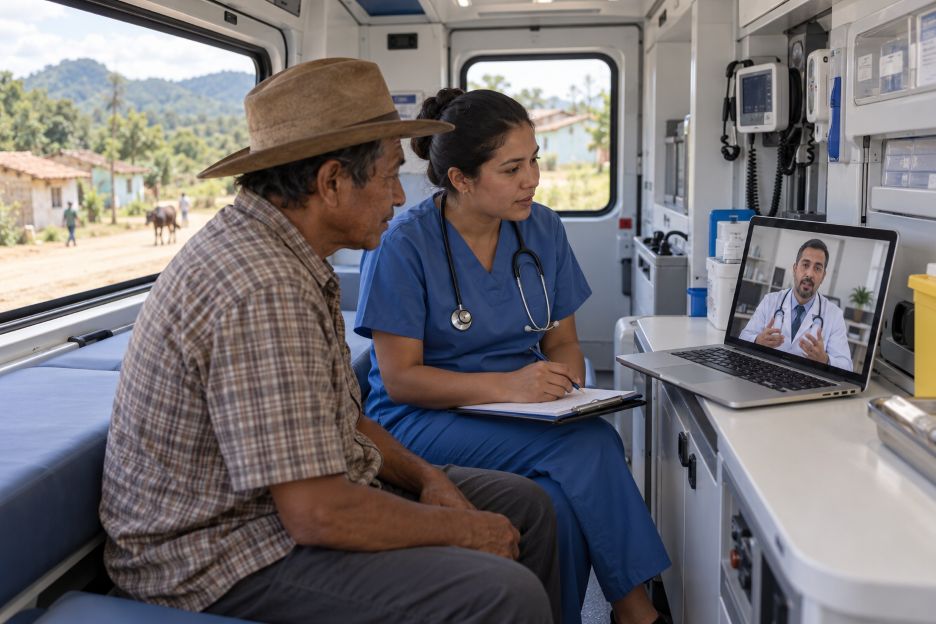
Telemedicine allows healthcare professionals to exchange clinical information across distances. Mayo Clinic describes how primary care teams can share examination notes, test results, and images with specialists elsewhere. For remote teams, this offers a route to advice when specialist services are difficult to reach. However, a connection alone does not establish a dependable care pathway.
Consider a mobile clinic visiting communities far from a referral hospital. Its planning team needs to decide who requests specialist input, what information accompanies that request, and what happens afterward. The following approach translates published telehealth guidance into practical planning questions for outreach coordinators, clinicians, and service managers.
A Step-by-Step Guide to Planning Connected Remote Care
Start with the service you want to deliver, then choose the technology that supports it. The World Health Organization frames telemedicine implementation as a process involving planning, implementation, and maintenance. Treat the steps below as a working plan that local clinical leaders can adapt before introducing patient consultations.
1. Identify clinical needs and responsibilities
Review referral records and ask frontline staff where specialist advice is most needed. Select a manageable starting service rather than attempting every specialty immediately. Define which consultations fit remote assessment and which require examination or treatment at another facility.
Write down the information specialists should receive, such as the presenting concern, relevant history, medications, and available findings. Assign responsibility for preparing requests, reviewing replies, and explaining the agreed plan. Mayo Clinic notes that remote specialist review may still lead to a face-to-face appointment. Build that possibility into the pathway from the beginning.
2. Assess connectivity at each service location
Test the planned equipment wherever the outreach unit will operate. Try a realistic consultation rather than relying solely on a coverage map. Check whether both teams can hear clearly, view necessary details, and send files using approved channels. Repeat testing at expected operating times.
Include electricity, charging, technical support, and replacement equipment in the assessment. Mayo Clinic identifies internet access and technology use as potential barriers to telehealth. Record what each location can reliably support, then decide whether to offer live consultations, another approved format, or an in-person referral. Avoid promising availability before these checks are complete.
3. Select tools around the consultation workflow
Choose tools after defining how advice will be requested and delivered. For example, ask whether the service needs a scheduled video conversation or specialist review of securely submitted information. When planning telehealth for mental health, include questions about privacy, patient access, and when an in-person appointment is needed. Agree on response times and specify who checks for outstanding replies.
Guidance from the U.S. Department of Health and Human Services emphasizes accessible interfaces, integration with existing records, clear staff roles, and simulated encounters before launch. Apply those principles to the travelling team. Rehearse registration, identity checks, interpreter participation, document sharing, and consultation notes. Give staff a named support contact and verify that receiving clinicians can access the same essential information.
4. Protect patient information throughout the visit
Map where information is collected, transmitted, viewed, and stored. Ask the responsible privacy lead to review local requirements and the proposed systems. Explain the consultation process to patients and document consent as required. Establish who may access records and whether any recording is permitted.
The U.S. Department of Health and Human Services recommends privacy risk assessments, secure transmission, protected devices, and private consultation spaces. Inside an outreach vehicle, check whether conversations can be overheard or screens seen from the entrance. Train staff on secure communications and incident reporting. Revisit safeguards when equipment, locations, or working arrangements change.
5. Establish backup and escalation procedures
Agree on what happens when a call fails before the first patient appointment. Record callback numbers, designate who reconnects, and identify an approved alternative. Let the clinical team determine when an interrupted assessment should stop and require another form of care.
Emergency planning guidance from the U.S. Department of Health and Human Services advises confirming the patient’s location, identifying local emergency contacts, and planning for disconnection. For a travelling service, update these details at every stop. Name the receiving facility and transport contact, and rehearse the handover process with staff.
Keep follow-up and evaluation connected
Before patients leave, assign responsibility for results, referrals, and the next contact. Explain the plan in language they understand. Ask them to repeat key arrangements, including whom to contact if the promised follow-up does not happen.
The U.S. Department of Health and Human Services recommends setting evaluation objectives, choosing relevant measures, gathering patient feedback, and reviewing performance regularly. Choose a small set of indicators that staff can collect consistently without distracting them from their clinical duties.
Review completed consultations, connection failures, referral completion, and patient feedback. Compare findings with the service’s original goals and discuss unresolved cases regularly. Use those reviews to improve the next outreach visit. Connected remote care should become a dependable part of the wider healthcare network, with clear ownership extending beyond the screen.